

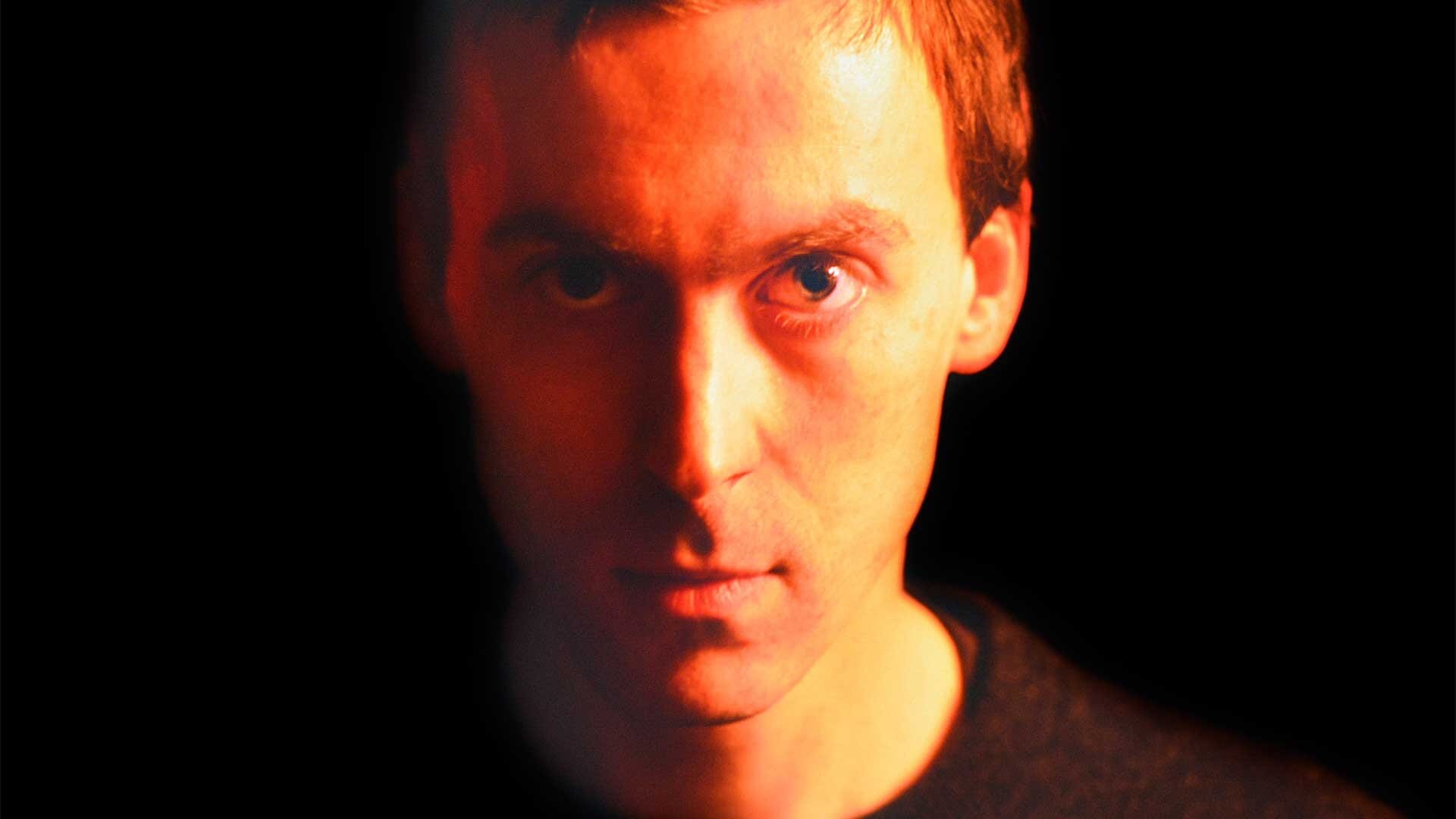
I sat down with Nick Land to discuss the influence of Kant on his philosophy, the meaning of the human and human extinction, the antinomy of AI apocalypse and simulation hypotheses, the implications of LLMs, whether Deleuze and Guattari were capitalist roaders, Nick’s convergences and divergences with the Austrian economists and Curtis Yarvin, neoreaction, China, Gnostic Calvinism, and whether Nick still has the thirst for annihilation.
As the anti-Lemurian forces appeared to be conspiring against our internet connection, suppressing the sound quality into the realm of the occult at times, I’ve opted to present the following transcript:
Vincent Lê: Okay, so I’m here with Nick Land. Nick, thanks so much for doing this. It’s great to be talking with you today.
Just so you have a sense of where I’m coming from with some of my questions in this conversation, I thought I’d start things off by very briefly outlining how I see much of your work as a radicalization of Kant’s critical philosophy. As we of course know, Kant’s decisive, practically world-historical breakthrough was to reconceive our perception and thought not as stemming from external objects in the sensible world, but rather as in some sense being constituted and conditioned by our minds’ own pure forms of sensible intuition, categories and principles of the understanding, and imaginative schema. Perhaps the most crucial consequence of this claim that our entire perception and knowledge is mediated by these a priori concepts of reason is that we can never know what objects are like as things in themselves or as noumena, but only in terms of how they appear to us as phenomena. This insight also incites Kant to redefine philosophy as the critique of dogmatic metaphysics by showing how—I mean, he doesn’t exactly use this term but—our conceptions of reality are basically anthropomorphic projections, which only legitimately apply within the bounds of our possible experience.
So that’s sort of Kant in a nutshell. Now, in your classic works like The Thirst for Annihilation and the essays collected in Fanged Noumena—but I would argue also, perhaps if only implicitly, in more recent works of yours, such as your stories of abstract horror among others—you opt for an alternative critique of dogmatic metaphysics’ anthropomorphization of an inhuman reality by essentially confronting us with the brute fact of our death. The way I formulate this in my book, Unknown Lands, is to say: instead of Kant’s transcendental idealist critique of thought’s attempts to stretch beyond itself by subsuming the things in themselves under the concepts of reason, you offer a transcendental materialist critique of thought’s attempts to limit itself to its own self-reflection. And you do that by appealing to the material reality of death that thought could never subsume, because death marks precisely the absolute negation or complete cessation of thought altogether. I think the way that you most pithily put this in the essay, “Making It with Death,” is you say: “death is the impersonal subject of critique.”
In those classic works, you develop what I’m calling this transcendental materialist critique by tracing the post-Kantian tradition of libidinal materialists like Schopenhauer, Nietzsche, Freud, and Bataille, all of whom are more or less united by the way they seize upon death in order to undermine our pretensions to know and exhaust reality. With their help, you wage a critique of the broadly phenomenological tradition—from Hegel to Heidegger and Derrida—for either recapitulating Kant’s more anthropocentric, idealist, and watered-down critique, or for just completely regressing back to full-blown pre-critical metaphysics. I think one way you describe phenomenology in those early works is as “the attempted proof at the impossibility of death.” We’ll of course get to capitalism and AI later on, but I’ll just add, by way of wrapping up these initial remarks, that one of the main reasons why Deleuze and Guattari’s account of capitalism as a deterritorializing machine seems to become so central for your critical project in these early works is because capitalism marks the most virulent critique of anthropocentrism by confronting us with a coming artificial superintelligence, which, by way of comparison, renders our own intelligence measly, parochial, contingent, and finite.
I don’t know if you would completely agree with the way I’ve characterized some of your work, but in any case, I guess the first question or conversation starter I have is basically: what is the role of Kant in your thinking today? Even if you’re not always explicitly using Kantian terminology anymore, do you still see yourself as in some sense operating in the mode of a radicalized critical philosophy, or in some sense making a transcendental critique of metaphysics qua anthropomorphization? It’s a blunt way of asking the same thing—and maybe it’s fitting that it’s blunt—but one way to ask it again I guess would just be: do you still have the thirst for annihilation?
Nick Land: Obviously, there’s a huge amount in that set up and, you know, covering a lot of time, a lot of topics. And I think they’re all still telling questions. I guess my immediate response—well, there’s several ways I could sort of tack onto this. Maybe the way to do it is this. So, obviously, if I start biographically, this is something that I think needs to be problematized. The biographical stance is itself the delusion to be escaped. But as a starting point, it allows a certain amount of narrative construction. So, at that level, I was obviously located, in the first moment that I had some articulate positioning within the cultural space, as engaged in continental philosophy. Within that, I think the natural process was one of slowly coming to accept that Kant’s critical philosophy more or less just is philosophy. It certainly just is modern philosophy. And that whether you have, as I have at various times, wandered through Heidegger or later Deleuze and Guattari, perhaps less obviously Bataille in terms of his Kantianism, or I think just as strongly one could say Foucault—all of these people are modulations of the critical philosophy. They’re just particular ways of pursuing Kant’s basic insight. So to be engaged in philosophical thought is basically to get Kant, to be able to think critically, to think through transcendental philosophy. The absolutely core insight that Kant has, that is at the root of it as far as I’m concerned, is the determination of transcendental philosophy on the fact that understands that conditions of objectivity are not objects. That to me is the fundamental understanding, and developing something out of that is what everyone is doing. Perhaps most faithfully or most straightforwardly, Heidegger’s “Being is not a being.” It’s just simply the application of the critical thought to ontology as a topic.
I think philosophy is in a sense basically a doorway into a larger tradition. And I think that the theme of the larger tradition that is most pertinent and most important—and actually from the point of view of thought, the most pertinent and important part of that tradition—is the notion of idolatry. So I think when people talk about a Judeo-Christian religious tradition as thought, as philosophy, that the essential core of that is the notion of idolatry—and I don’t think it’s a stretch to already say the critique of idolatry. And then that larger frame—to go back to the basic thesis of transcendental philosophy, to say the conditions of objectivity are not themselves an object—is just trying to systematize an avoidance of idolatry in the language of modern philosophy. So that’s the kind of intellectual frame. If you say, “so to what extent is Kant still pertinent?,” there’s lots of specific issues that Kant has and insights that I still refer to frequently. But it’s mostly as a passage into this question about the idol in our religious tradition that his importance in the largest sense is for me—and particularly, I think, one’s own special intensity about that is time…
Just to address one other major theme that you were introducing. Well, it’s two connected, which is anthropomorphism and death. I think that these things are very related, because the danger obviously is that a thematization of these problems in terms of death risks anthropomorphization. It risks romanticism in that respect. Obviously, I have become increasingly comfortable with language more like outsideness and the outside, even though you could say, “well isn’t that just talking about death? What’s outside us is death for us.” I think that’s kind of right, and we could work through that within the tradition of transcendental philosophy quite easily. But I think it avoids an immediate danger of overly humanizing the issue. As you said, we can come to this later in talking about notions of the meaning of humanity, the meaning of human extinction. It has a different valence when you raise those questions as the relation of humanity to the outside than the relation of humanity to its death. The death of humanity—I mean, the death of humanity as that which lies outside humanity—is a far less straightforward question actually than just talking about it in the sense of the death of humanity, the death of the human individual, which is something that we feel that we understand.
Just to close this particular bit for you: as you say, a certain take on the basic Kantian thought is exactly that. The thought which lies beyond the frame of human objectivity can be said to be death for us, but it’s more importantly the unknowable for us. And if we think that, by talking about it in terms of death, we know what we’re talking about, then we’re clearly risking losing track of the deeper critical insight about it. If what you’re interested in—and I would say what I have always tried to be interested in—is the thing in itself, then that is a thought that can be domesticated by the language of death, because one is treating it as if through some weird kind of dialectic, where you can work through the thought of one’s own negation, one is somehow arriving already at the outside and the unknowable.
Vincent Lê: Right, yeah. That makes a lot of sense to me: Kant as a kind of doorway to other traditions, and conceiving that which is beyond the human as outsideness—or the outside—instead of death. Both of those points seem very intimately connected to me. I guess when I talk about you wielding death as the impersonal subject of critique, that’s in your very early works, because already when you start talking about, when you come to Deleuze and Guattari in your works and this focus on AI and capital, at that point, critical philosophy is already a doorway into the traditions of economics and artificial intelligence research. And then with them, at that point already, death starts to be reformulated—or that which is beyond the human starts to be reformulated, not strictly as death, but also as a kind of outside.
It seems like now you conceive of the thing in itself, let’s say, as outsideness, something outside the human, rather than the death, strictly speaking, of the human. This sort of anticipates my next question, but I’m still interested to ask it, because I think it would be clarifying for how you were thinking of things in your early works and how that differs now. And then I’ll stop going on about your early works.
You are of course well-known for making such pronouncements as, most famously, “nothing human makes it out of the near future.” But also pronouncements like “life is being phased out in favour of something new,” and my favourite one is: “that humanity is fated to terminate is among the most basic thoughts and no more than the most elementary qualification for philosophy.” I take these kinds of pronouncements in a relatively literal sense as affirming not only the end of various human beliefs, traditions, and cultural practices—though of course they definitely entail that as well—but also as in some sense going a bit further and affirming actual human extinction. Yet, in a recent interview, which tracks very well with what you were saying just before, I was somewhat surprised—not entirely—but somewhat surprised to see you situate those kinds of pronouncements about the no-human future in the historical context of poststructuralism and posthumanism, particularly academic, scholarly posthumanism. I mean, it makes sense why you would do that, why you would situate it in that context. The most famous encapsulation of that version of the no-human—or anti-humanism and posthumanism—in that academic, historical context is probably Foucault’s remarks about “the death of man,” where that is generally understood as the death of how man has been traditionally conceived as Cartesian, enlightened, rational, whatever, rather than our actual demise.
I think we also find a similar ambiguity if we time travel a bit further back than poststructuralism to another one of your major influences and definitely a major influence on me, too: namely, Nietzsche’s Zarathustra, and especially his declarations that man is something that must be overcome to make way for the overman or Übermensch. Now, there are of course those who tend to read the overman in an allegorical sense as affirming the overcoming of one lower type of humanity or conception of humanity in favour of a higher type or conception. I guess the most obvious ones are, let’s say, fascist readings of Nietzsche that tend to interpret the overman as the great man of history rising up above the herd, and existentialists who tend to read the overman as a kind of chain-smoking Parisian intellectual looking over the Seine with nausea and achieving the freedom to shape and reshape themselves. But then there are also those—and I would count myself more among this school of interpretation—who read the overman, often also in conjunction with Nietzsche’s remarks about breeding and natural selection, as heralding some kind of posthuman as radically divergent from us humans as humans are from worms, to use Zarathustra’s own comparison.
All of that just to say, or actually rather to ask: even if you’re more interested in what’s outside the human now than, let’s say, the death of the human as more useful for a critical project, do you see those pronouncements that you used to make about human extinction, the no-human future, and so on as primarily referring to the replacement of one conception or type of humanity by another or in a more radical, literal sense? Or both? Or perhaps in another way altogether I’m overlooking?
Nick Land: This is a very interesting and complicated question, because I think that the neat distinction you make between those two options is more fragile than it might seem. I think again, if we just at this initial stage keep doing our recycling back through the elementary steps of critique, that among Kant’s hugely influential insights is the notion that we apply critique specifically in a way that—it’s not just a psychology, but as a shorthand that might be a way to think about it—it produces this notion of the empirical ego. And the empirical ego is obviously, it’s exactly what then feeds up through Freud and into Lacan, and into all of the psychoanalytical developments. You get another version of it in Heidegger with the Das Man and Eigenlichkeit distinction. I think Anti-Oedipus is basically fundamentally about recapitulating that same move in a different vocabulary. So we’ll say, okay, what Kant has seen is that our self-understanding is an internal narcissistic idolatry, that when we try to make sense of what’s passing through us, what is happening in our lives, we do that through this construct, which is the empirical ego. We’ll say that is the subject of what is happening, what I’m doing; it’s an adequate identification of the agent that is operative and to which I attach my name. If this is the framework, which of the two options that you raised are we talking about? If we say, what is at stake in the language of death or the language of the outside—according to preference—is a response to the Kantian notion of the empirical ego, are we talking about the framing which you very reasonably attribute to Foucault? Or are we talking about something that, as you would say, is more literal?
I assume that, let’s say, someone reading Deleuze and Guattari and Foucault side by side, they would probably be tempted to say—into the structuring that you’ve just unlocked—you can with some confidence put Foucault on the first side, that what’s happening here is simply that a certain notion or construction of the nature of humanity is undergoing this process of historical revision; and Deleuze and Guattari leaning more on the ontological side, at some fundamental biohistorical processes just radically transforming that entity that we know of as man. It obviously is the same critical machinery that’s really a work in both those thoughts. They’re actually a kind of Janus-faced thought more than two separate, entirely independent conceptions of work there.
I guess I would want to retreat when interrogated at least into a certain ambiguity about this issue, because I think that, at the level of critical philosophy, it’s not really clear that that is an option that is real or that we can make. If you say, well we’re talking about reaching beyond the empirical ego, a critique of the idol of the empirical ego, I think that’s a different thing. I think there’s a lot more of this that we’re programmed in this conversation to come back to—a number of things, actually, in other frames that will maybe be able to take us a little bit deeper into it. So maybe I should just pause at this stage.
Vincent Lê: I certainly see that the literal reading of the death of man, or human extinction, or however you want to phrase it—that definitely entails, I think, necessarily the other possible, more symbolic reading of human extinction, the death of man, as well. I don’t think we can be confronted by extinction without that really fracturing a lot of our self-conceptions. But then the reverse, I’m not 100% sure. I think you could have a reconception of the human without that necessarily of course entailing literal human extinction. So, yeah, I basically agree. I just would see the connection as tighter going with the literal reading. I mean, they’re more inextricable perhaps. I’m not sure.
Just a logical follow-up question that might help clarify things. But as you say, maybe turning to other subjects might actually draw things out even more clearly. But is your conception of the human at this point, is it, as you said, the idol of the empirical ego? Is that essentially how you conceive of the human? When you speak of a no-human future, let’s say, what would actually be, what is the thing that’s missing? Is the thing that’s missing from that future the empirical ego?
Nick Land: At the risk of being very disruptive in terms of your neat scheduling of topics, I’m really tempted at this stage to just fast forward momentarily to this set of questions that are concentrated on the notion of Gnostic Calvinism, because I think it’s that that really crystallizes this problem at the most intense level. Trying to push that up the road is in a way producing this kind of artifact, trying to imaginatively conceive of a framing that would be less intense. And I think that’s a somewhat perverse or unnecessary lever.
So I’m just going to chop right forward and then we can come back. And just say that I haven’t yet done a careful reading of Calvin’s Institutes of the Christian Religion. It’s a very tentative label in this way. I certainly need to do a lot more work on both sides of it. What it’s pointing to really is a sense of the kind of cultural complex that we find ourselves in at the end, I would say, particularly of the Anglo-Protestant Whig tradition—at the end, quite specifically, of our historical, economic, cultural, religious tradition. It’s characterized by two formations that are in a certain sense syzegetically combined, but their relation is extremely peculiar and ambiguous. If you’re looking at it in terms of the professional or formal AI debate, it’s characterized by two strands. On the one hand, AI safety in which obviously the question of human extinction prominently functions in a very literal way. So we’re on one side of your division there. And the other side is the simulation hypothesis. That is more—
Vincent Lê: Sorry, what was the other side?
Nick Land: The simulation hypothesis.
Vincent Lê: Oh, okay. Yes.
Nick Land: That’s the Gnostic side. So the Calvinist side is to do with certain, it’s a thinking about time, thinking about apocalypse, particularly in its catastrophic or disastrous sense. And the Gnostic side is thinking about apocalypse in its revelatory sense of unconcealment, of passing beyond the veil of illusion. So the simulation hypothesis is basically saying obviously that, in its economical form—which can be fact-based, historically necessary, it’s the only formulation that really makes sense—is to tie it to our technological trajectory. To narrativise it is to say that we can see that the construction of increasingly sophisticated simulations is something that’s very integral to this track that we’re on. We have lots of metaphors for that in videogames of going to ever more convincing, ever more immersive forms of envelopment in these simulation environments. So, as Bostrom and many others have said, you track that forward on some kind of what we consider as a plausible historical curve, and you get to this point of arbitrarily massive high-fidelity simulations. The question then would be why would we think that we weren’t in one of those, that we weren’t retrospectively revisiting history within an advanced simulation rather than we were in base reality? That is explicitly and often referred to as a neo-Gnostic position. So, in popular culture, these two different strands are basically well captured in terms of popular cultural imagination by, on the one hand, The Terminator franchise, which has to do with time anomaly and the threat of human extinction, and The Matrix franchise, which has similar themes but from this Gnostic point of view where the whole question is the fact that the world is simulated by triumphant, posthuman, intelligent beings. Now, the crucial point here to me—and the amazing point (I try now all the time to get people interested in it)—is that, for a very large number of the most interesting contenders in this whole world, they hold a high (p)doom, existential risk, AI safety position, like, you know, characterized obviously by Yudkowsky’s book, If They Build It, We Die. So that’s obviously where we’re on one half of your question about death and extinction and all of that with this. And yet they also hold a high probability that we are already in a simulation.
Now, these two frames are an incredible thing to hold together. I mean, really, it’s an absolutely fascinating, amazing, wondrous, historical thing that they can both exist, powerfully and strongly exist, to hold both of those frames simultaneously, in the same interesting, numerous people. Leading thought leaders in artificial intelligence being interviewed, and in the same interview will pass from one of these frames to the other frame smoothly. So, in the first half of the interview, they’re saying, “artificial intelligence poses a massive existential risk. If we do it, we’re all going to die, lose control.” And then in the second half of the interview, they’re saying, “of course we’re in a simulation. It doesn’t make any sense to think it could not be. It’s probabilistically impossible. There’s one base reality and untold billions of high-quality simulations, historical revisitations from the future.”
To me, amazingly, the interviewer just says, “well, can we actually walk back and forth between these two frames just for a minute? Because in the existential risk frame, you just said, ‘we all die.’ And in the simulation hypothesis frame, you just said, ‘we’re all in the simulation.’ And in the existential risk frame, you’re saying, ‘we have to stop this thing happening.’ And in the simulation hypothesis frame, you’re saying, ‘it’s already happened and we’re already swallowed up and enveloped by it.’
What’s the story? Is there actually any narrative construction that can really allow you to cross backwards and forwards without just overt cognitive schizophrenia between these two different models, both of which you hold with great intensity? As I would say, as a Gnostic Calvinist, you are a Gnostic Calvinist. You both believe that story and you believe this story. You believe totally, you have total commitment to both. But then you ask a question, like you say, ‘if this happens, we will all die.’ And in this other one, you’re saying, ‘this happened and we’re all being simulated.’”
So what I’m saying is that this is panning out from your question. These are two notions about what it is to be dead. Even though we’re trying to be literal, but literal within these two frameworks, is to be dead to be in a Terminator, burnt-out battlescape, being hunted down by evil machines? Or is it to be seemingly leading a more or less comfortable existence in some period that in the simulation is leading up to this great apocalyptic moment, inside a simulation?
Those, at least on the most superficial level, seem like two very, very different notions about what it is to be dead. But they probably are, you could say, both ways of being dead. I mean, if you wanted—as I say, at a risk of romanticism or of idolatry—you could say what the simulation hypothesis is saying is we are already dead.
I’m not necessarily suggesting that. I think that that is useful only for the purpose of provoking reaction. But I just want to say this is why when you raise this question, like when you’re saying, “what kind of death are we talking about?,” this is now how I’m thinking about it. Exactly like this. If you were to say to me, “as a Gnostic Calvinist, how do you think about this?” There, that’s how. And so, obviously, it’s a puzzle and, you know, a prompt to try and work this through, which I think the whole culture is trying to do. It’s not that there’s some neat, settled conclusion to it. But yeah.
Vincent Lê: Okay, that’s a really interesting reframing of it. I could really see those two conceptions of death through the AI safety apocalypse and then simulation hypothesis. I’m sort of tempted to segue into a bit of an AI discussion, but I’m just curious now. In terms of how they can be—I mean, people hold them—but how they can be diagonalized, synthesized, or made coherent, so that remains a puzzle for you as well? Or are you finding something by going back to this Gnostic Calvinist tradition and doctrines of predestination and so on? Are you finding some kind of—
Nick Land: My assumption is that this is apocalyptic, and the apocalypse is revelation. So you cannot have a revelation of the apocalypse prior to the apocalypse. You cannot anticipate the apocalypse in thought. It seems to me I have no expectation that it’s possible to arrive at a lucid conclusion as to the truth of apocalypse, proved apocalyptically. In fact, I’m firmly persuaded that that isn’t a realistic ambition. So I think ambitions need to be reordered with that in mind. So, yes, I’m just saying that my attention is really watching what is happening to the culture, which I think is thinking this through. I think it’s being thought through the culture. And I think, if it was being realistic, it has to have the same guideline of the fact that it shouldn’t expect that it’s going to know where it’s going until it arrives at its destination and this process that is taking place.
Vincent Lê: That seems totally understandable, in its incomprehension. Again, it’s sort of reminding me of Kant. We’re kind of dealing with the antinomy of the apocalypse in a way.
Nick Land: Can I just say that I think that’s really good. But I think obviously it’s a relation to Kant that is probably, that Kant would have problems with in the sense that it’s bringing the apocalyptic to bear on the question of the unthinkable in Kant.
Kant thinks we can arrive at what can be known through critiques. He’s arrived, you know, and it’s like he knows what can be known and can’t be known. It’s settled. So he doesn’t have that historical sense of the fact that there’s a question that isn’t simply, that cannot even yet be said to be unanswerable. It’s like it’s not yet answerable. And it’s not yet answerable even in the sense of being said now, or ready to be answerable. Both of those are presumptive conclusions that are not sustainable.
Vincent Lê: I want to maybe segue slightly into AI on that note, though I do want to come back to Gnostic Calvinism as well. It seems like that’s going to be the overarching future that’s pulling, that we’re gravitating towards throughout this conversation, which is fine.
Basically, the insight from your work that resonates most strongly with my own philosophical writing and research is—I guess it’s also the claim that you’re most well-known for probably—capitalism and AI are the same thing being seen from different perspectives. As you most famously put it, “the history of capitalism is an invasion from the future by an artificial intelligence space.” Even though you of course said this 30 years ago now, it’s not only for me, but I think it’s pretty clear that that claim is one of the main reasons why so many other people are increasingly finding your work prescient in this current moment, whether they also find it ecstatic or nightmarish as well…
At the same time, in popular consciousness today (speaking of where the culture’s at), at least as far as I can tell, AI is increasingly being conflated almost exclusively with large language models, and usually with ChatGPT, but let’s say with LLMs in general. I find that kind of surprising how fast that’s happened. Basically, in just a few years—really since the beginning of 2023 with the public release of ChatGPT 3 and 4—when I talk to anyone about AI, what they have in mind is chatbots, not even really robotics, not AlphaGo, and certainly not capitalism or the spontaneous order of self-organizing markets.
So I guess this raises a couple of related queries from me. I guess the most basic one would just be: what do you think about LLMs? Are they in your estimation nearing full-blown AGI as Sam Altman and Blaise Arcus among others pretty confidently claim? Could they therefore pose existential catastrophic risks as Yudkowsky and the AI safety doomers never tire of warning us? But also perhaps even more to the point, do you think that anything is lost when AI is conflated just with the current paradigm of LLMs, rather than with capitalism as your classic thesis seeks to maintain?
Nick Land: Okay, again, there’s a lot there. So let me try and be systematic about it. You might have to jump in again on some of the other bits of that complicated question. The first thing I’d say is that I think the fact people identify AI with LLMs is because LLMs have made an incredible leap forward. I think they have merited this. Personally, I think now the Turing test is in the rearview mirror. I know this is very controversial, but I would say generally that the notion that, using Turing criteria, AI will ever cross this threshold where its performance is like human level, I think that that’s there. It’s like generally the average human and the average AI, yeah, there are some differences, strengths and weaknesses. But the notion that there’s some obvious human superiority now seems to me not really sustainable. And, you know, if you’re going to, people are going to ask about some complicated question, I think that everyone would say: well, look, if you stop someone randomly in the street and ask them, you’re not going to get as intelligent an answer as you would with a good prompt asking an LLM. So I think it would be strange to resent that they have earned themselves this name, that they have basically earned to incarnate AI as a category.
There’s just a couple of basic things to say about this. One is that the long-term issue with AI as a discipline has been a tension between—to be really crude, but I think it’s essential—a bottom-up and top-down model. The curse of AI—which hasn’t been lethal for reasons we’ll get to it, but it just didn’t actually matter until right now—has been that it’s been under the aegis of a kind of top-down programming model that someone is going to actually just basically type a reality model into this thing and it’s just going to use propositional logic about the world that’s been fed to it carefully and that’s how you get to it. I think probably for people now, that just seems comical. But that has actually been the dominant tradition.
Obviously, on the other side of the tradition—which many people have been quite prophetic about—first of all, it’s very much tied up with decentralization and spontaneous order. The mission for the neural net, the perceptron, goes right back to the 1940s, where the framework in which you can build up to artificial intelligence is as this decentralized network that’s kind of modeled in a way on human neurological organization. Well, obviously, the detail is not that you’re rebuilding the structure of the brain, but it’s just that you have a decentralized set of connected cells that learn and that intelligent behavior emerges out of this system. The crucial thing—which I think some people realized very early—is that critical thinking is simply quantitative. This was not pandering to the egos of the people involved in the field, because they were basically saying, “well, what matters is really clever programming. We have to have a good model of what an artificial intelligence is. There have to be conceptual breakthroughs in how we build that—and our discipline, the dignity of our discipline, is based on that.”
Way back in the 1980s I think, Hans Moravec is saying it’s just quantitative. If you put it on the graph, and when you’ve got a certain amount of processing power, you’re going to get a certain amount of performance coming out of there. And then the software, the programming, will just come along for the ride, will be there. But you don’t have to worry about it. If you’ve got the processing power, you’ll end up with the results that you’re looking for. I think that that model, as I say, is very unflattering to AI as a professional field, because it’s so fatalistic and deterministic. And it is actually throwing things out to the industrial economy, to capitalism, to actual chip manufacturers. The semiconductor industry is the final criterion for what you’re going to end up with, not people sitting in AI labs. I think that that model has been just massively vindicated. That’s my hope that the LLM thing means. I think it should finally distill any notion that the tradition that matters is the bottom-up, quantitative, compute-based model where you just kind of—I mean, of course you can try and make these things more efficient. You know, that’s not an uninteresting or unworthy goal. But fundamentally, you’re trying to release the capability of your technical computational capacity.
That’s what AI is about. It’s not about inventing something that you then look for the technical resources for. It’s that those resources are coming online on a crazy curve, Moore’s law, all of this stuff. It’s an industrial economic trend line. The capacity for that needs to simply be unleashed through a model based on training, not based on programming. It seems to me of course that how could it not be that’s the case. I mean I just don’t see how we could go back. That’s why I think LLMs are hugely important. I think they’ve taught people what the road is that needs to be followed. So, even if people think there’s going to be hiccups on that road—or even whether you need other conceptual breakthroughs to crank up to another level—I think that we are firmly now on the correct road, which has not been the case for the majority of the history of artificial intelligence, as I say, as a discipline.
Maybe just quickly one further thing to say about this. So the really crucial question now is: what are the actual cybernetic dynamics of LLMs as they are now? Is it that, for this particular breakthrough, we’re going to get perhaps some kind of S-curve type thing, that we’re going to get diminishing returns, that the models are going to, you know, we’re going to throw more and more computational power at them for less and less obviously revolutionary results? Or is it going to, are we actually at this crucial threshold of man’s last invention, explosive superintelligence where, because of the fact that they can actually reflexively design themselves, the whole thing just explodes hyperbolically and it’s like we are basically now at the ignition stage of singularity? I think that at my level of expertise—which is, of course, extremely low—this is like an open question that I’m paying attention to.
I’m fascinated by the fact that we’ve gone very quickly because of LLMs from saying that people who seem to be extreme AI catastrophists, let’s say—using that neutrally, not to say disaster theorists, but just to say it’s going to be this huge thing happening very soon. Like obviously most notably, Kurzweil was talking about the 1940s, sorry, 2040s as being the moment when we actually hit singularity. Whereas some people who seem relatively sober are saying, “oh no, it’s going to all happen within two years.” You know this “AI 2027”? I don’t know if you’ve managed to read that paper. Now, I’m not at all saying the “AI 2027” people are right. Obviously, they’re on the second thing I said, like it’s not going to S-curve off and give us a little pause before the next breakthrough. Instead, we’re in the ignition stage. I’m not saying that’s right. I’m not ruling it out. But I’m saying the fact that that is now the state of the conversation is extraordinary. It’s an extraordinary shift that people haven’t adjusted to. From thinking that maybe, if the crazy people are right, things are going to really go nuts in 25 years, to saying, “no, on the contrary, we’re living in the last couple of years where we can at all make any sense of it.”
Vincent Lê: Okay, there’s a lot there, a lot of intriguing threads there. I guess my experience of LLMs is mostly because I teach at universities and so I feel basically now like a… It’s actually kind of interesting because I started teaching at the beginning of this year again, but I took a break for several years, three or four years or something. So there was a big break between basically when LLMs started being adopted en masse. And so starting teaching again at the beginning of this year, I basically feel like a Turing cop. Like it really feels—and that’s all, that’s everything that the teacher meetings are about and the policy changes and the emails you get from the university. It’s all just about how you can be a successful Turing cop now.
So yeah, I definitely feel like I agree with you that the Turing test has been well and truly passed at this point. There’s lots of threads there. I don’t know if I’m going be able to pick up all of them. But I guess the other thing I would say is I definitely find various arguments, like Blaise Arcus’ recent book What is Intelligence? among others, I find these kinds of arguments that LLMs are maybe already as generally intelligent as humans—if not very quickly approaching general intelligence in some sense—I find them pretty persuasive for the most part. And then I guess what I’m thinking about is with your thesis that capitalism is AI in the background. Because the Turing test is: can an AI deceive humans into believing it is also a human intelligence? So even if AI in the form of LLMs are well past that point now for the most part, I guess for me, the real question of what intelligence can do, or what superintelligence can do—and maybe this is being a bit unfair and pushing it, moving the finishing line or the goalposts—but for me, the ultimate question would be not whether LLMs or AI in general can do everything humans can. It would be: can it do everything that capital can? Because capital is already a vastly more general intelligence than us humans to the extent that it can solve complex problems—most notably the planetary coordination of production and distribution—that no human intelligence or collective politburo of human intelligences can competently solve. So for me, capital remains the ultimate blueprint or regulative ideal for what intelligence can do. And from that perspective, in terms of Kurtzweil’s 2040s prediction for AGI or the singularity—and even this 2027 thesis of Scott Alexander and others—actually they’re both too late. Their dates should really be centuries ago.
Based on some of what you said, I feel like I have to think about how I’m conceiving LLMs a bit more. But another way of just summarizing it would be: at this stage at least, LLMs are to capital what a given particular species is to natural selection in a way. It’s not the larger intelligence itself. It’s a product of that intelligence.
Nick Land: Can I just say on that: I think that’s a really good way of structuring this. But I think that this is straight within the bottom-up AI tradition associated with, for instance, genetic algorithms, and I guess to a degree A-life, and already in neural nets: to treat the intelligence system itself as a competitive natural selected system. Obviously, a brain is already a micro-ecology with forces of natural selection taking place inside it.
It’s just to say, I totally agree with this thing that, okay, the natural selection mechanism is ultimately the intelligent mechanism. But these sub-components—what you’re saying about the species within it—are themselves actually hosting the same dynamics. At a different scale or at a different level. And that’s why they work.
Vincent Lê: Things like evolutionary or genetic algorithms and various machine learning processes like reinforcement learning and even game playing AIs like AlphaZero definitely—Sorry?
Nick Land: I’m just agreeing with you.
Vincent Lê: Oh, okay, sorry. Yeah, that definitely brings it closer to natural selection or the capitalist intelligence itself. As you were speaking, the person I had in mind actually—which I think might help us segue into the next thing I’d like to discuss—is Hayek of course. Because Hayek’s book The Sensory Order is precisely—I mean, Hayek is obviously most famous as an economist studying capitalist competition, market competition. But he also has this book, The Sensory Order, which is basically an early neural net model of the human brain. It’s just clearly not a coincidence that he’s an economist studying market competition and then conceives of the brain in that way.
Nick Land: Absolutely not. Exactly right. But I think this is the conception at the core of the Anglo tradition. Spontaneous order—or, you know, it’s Adam Smith, it’s Darwin, it’s then in all of these things we’ve been saying, these kinds of distributed systems, self-organization, and the whole of the thing that was the Santa Fe Institute type things about complexity. It’s all about spontaneous order, about distributed systems without some superordinate controlling instance producing these emergent intelligent outcomes. It’s obvious one side is the theological conception. And you know, on the other, as you say, it’s economics, or it’s a certain kind of very functional technological mindset. Or biology, neurology, you know, sure. It’s all of these things. It’s just a characteristic Anglo cultural trait to tend in that direction. So, yes, Hayek absolutely epitomizes it for sure. He just latches onto that vision and sees it everywhere, as he should.
Vincent Lê: Yeah, definitely—and he draws some of those same, he traces those same connections. He talks about, you know, Darwin reading Adam Smith, Scottish enlightenment thinkers, while on his travels and conceiving of his version of natural selection. So yeah, it’s definitely there.
To be continued in Part 2…
I’m just some guy— but I’ve felt for a while that “the evolutionary tendencies of the artificial world are a lot more important than human intelligence” is a really important idea that helps make sense of why the whole concept of AGI can seem a bit confusing.
“The AGI is trapped in a bigger AI, just like the rest of us” is not taken seriously enough, I think. I always feel like there’s something fundamentally objectivist about the accounts of AGI emerging as a superintelligence; like it’s more anthropic than it might think it is.
“A singular Very Smart entity comes along and beats all the other entities— even me, a human who is very smart!” I think it’s probably more likely that it accelerates the logic of the structures which we’re all enmeshed in, smart or not.
Which is still ruinous and a disaster, but in a different way? It’s the disaster of a complex ecosystem collapsing into a simple one, not the disaster of the smart men who dictate the future being usurped by the smart robots. The smart men never did control the future, and as you say the smart robots won’t be smarter than capital. Or even more specialised robots, in local domains; this is an ecological dynamic being seen as an agential one
The question of whether current LLMs have passed the Turing Test is interesting. There are AI experts who claim that it either has, or the test is no longer relevant. But there are many instances when one is communicating with an LLM, and the conversation breaks down and you realise that they don’t really understand anything; it’s just advanced pattern matching. In this regard, the test is still relevant, and they are still failing it.
Of course, we can talk about how humans do the same. Humans pattern match, appear to not understand anything in some contexts, have inbuilt guardrails, safety features, and hidden loyalties, and we don’t really know if they are NPCs or not. AI doesn’t need to pass the Turing Test to reach singularity levels, and in that respect, I do agree that we are approaching the inflection point.
Side note: please discuss UAP/UFO disclosure as well next time you interview Nick, this is such an important topic.